E-commerce website design and development on Shopify, Medusa or custom Next.js: product pages that rank, a fast checkout, payments, taxes and shipping set up.
Send your site address. We look at the site, your ads and your search presence and send back what to fix first and a one-month plan. Ads management is quoted after the review.
E-commerce website design and development is the build of an online store that loads fast on a phone, ranks for category and product searches, takes payment in a short checkout and handles taxes and shipping for the markets you sell in. We build stores on Shopify, on Medusa as a headless store, or as a custom Next.js storefront with Stripe, and move existing stores off WooCommerce, Magento or an older Shopify theme with a redirect for every product URL. Online stores are quoted separately for each scope; get a written estimate or book a 30-minute strategy session to start.
What "online store" means in 2026
An online store in 2026 is a working commerce system: it loads in under two seconds, ranks for category and product searches, holds up under peak traffic, and stays maintainable when your catalogue triples. A recoloured marketplace theme meets none of those on the day the traffic arrives. Marketing MIX is an international marketing studio, founded in Kyiv in 2012 and headquartered at 208 Booth Street, Ottawa, since 2024, working across Canada, Ukraine, Germany, and France, and has been shipping online stores since 2012 — including catalogues built to hold up through Black Friday traffic peaks.
Where we land on platform choice
Most agencies will sell you whatever they specialise in. We sell what fits your case, because the wrong platform choice costs more later than any agency fee.
Your situation
Platform we'd recommend
Why
First store, <500 SKUs, single market
Shopify Basic / Advanced
Lowest operational overhead, widest choice of ready-made apps, fastest to launch
Open-source, owns the database, no platform lock-in
Enterprise, >€20M revenue, multiple brands
Headless on Commerce Layer or custom Stripe-driven build
Multi-storefront, multi-region, full ownership
You sell digital goods or services
Stripe Checkout or Paddle, no store
Lighter, faster, no inventory management overhead
What every store we ship includes
Server-rendered product pages with full schema markup (Product, Offer, AggregateRating, BreadcrumbList).
Category pages that rank — proper H1/H2 structure, filtered URLs that index correctly, real copy not just product grids.
Search that works — Algolia, Meilisearch, or Shopify Search & Discovery depending on platform. Typo tolerance, synonyms, faceting.
Checkout optimized for conversion — single-page on Shopify, custom on headless, with Apple Pay / Google Pay / Klarna / PayPal where they convert. For a Stripe store, our Stripe account setup guide lists what to send us before the build.
Abandoned-cart recovery — Klaviyo or Shopify Email, with the second-touch always going out as SMS.
Reviews — Judge.me, Yotpo, or Stamped. Real reviews, marked-up with AggregateRating schema, displayed on product pages and rich results.
Loyalty and referral — only when the unit economics support it. We won't bolt on a points programme for the sake of it.
Analytics — GA4 + server-side conversion API + Klaviyo + a CFO dashboard in Looker Studio.
Performance — Core Web Vitals green on every product page on launch day.
Stores we can show
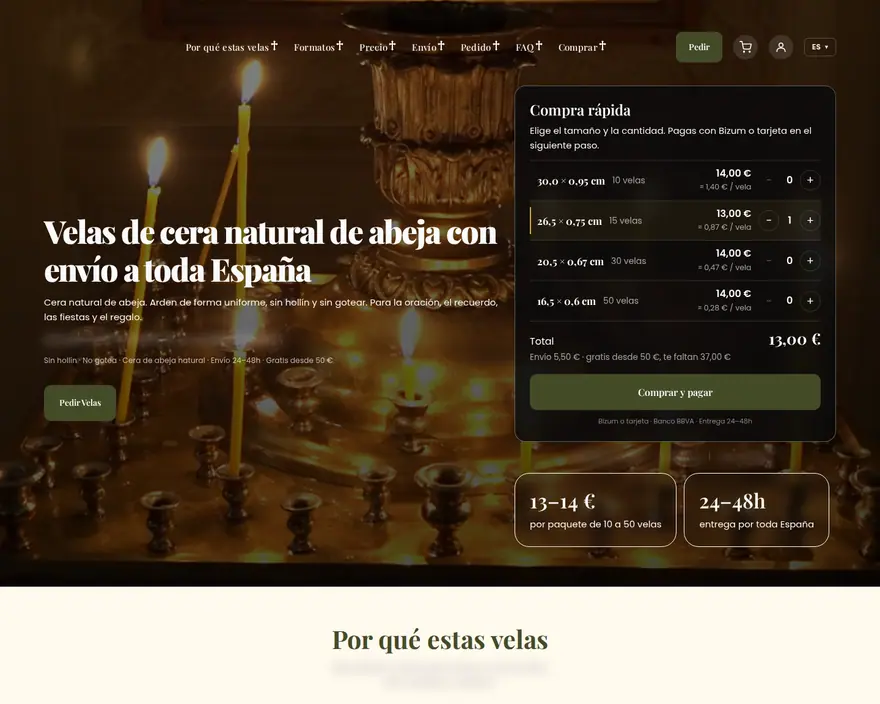
Church candle shop, Spain: a five-language shop for beeswax candles with card and Bizum payments, returns, a customer account and shipping labels. Read the case.
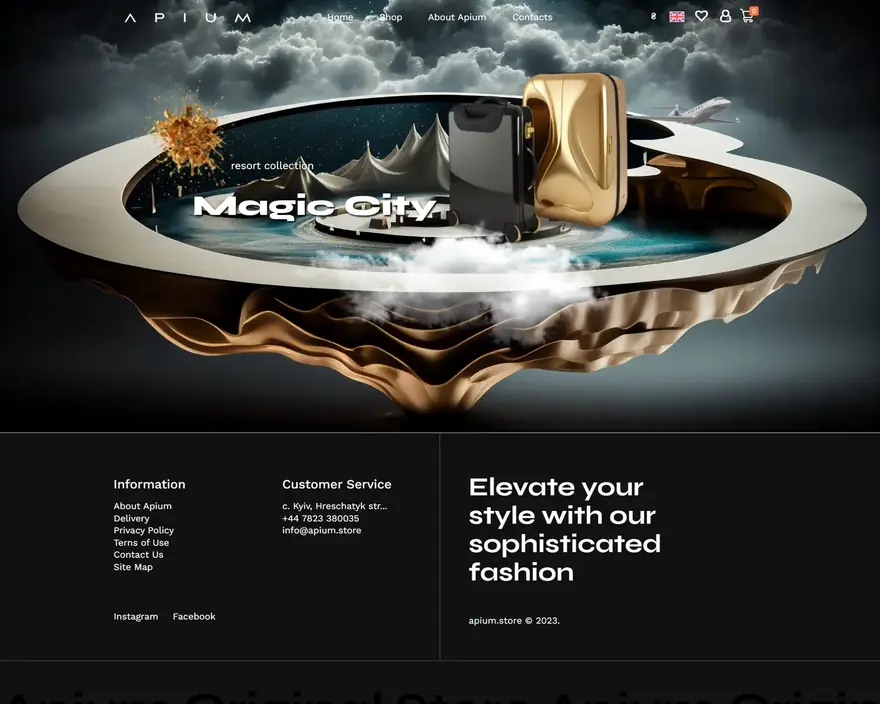
Apium Original Store, Ukraine: design and build of a store for suitcases, diaries and wallets, with named collections and three currencies. Read the case.
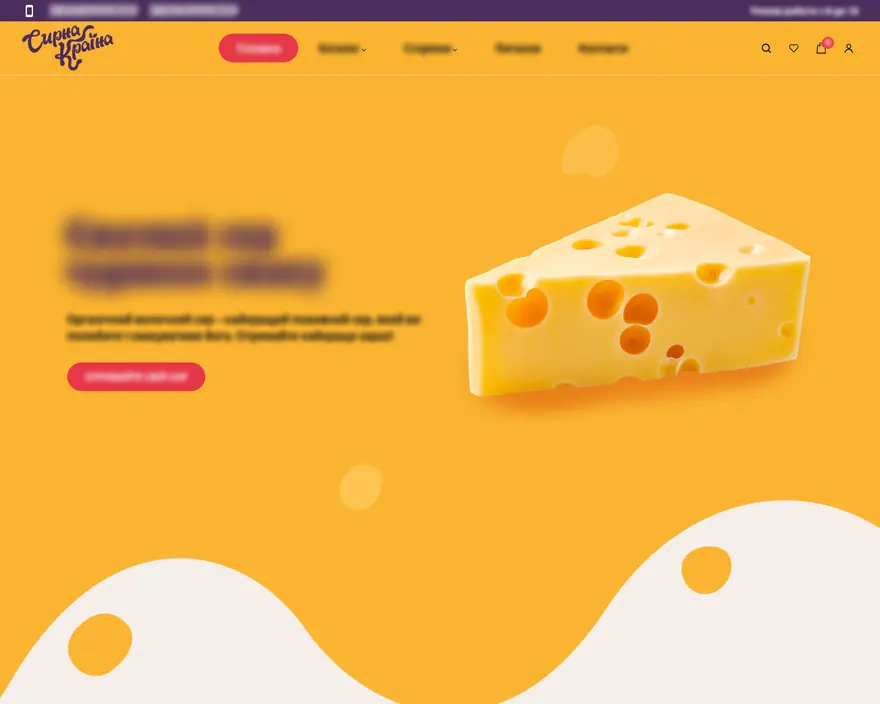
Cheese Country, Lviv: an OpenCart store for a cheese and butter producer, with product cards and chilled delivery rules. Read the case.
How we approach SEO for stores
E-commerce SEO is a separate discipline from content SEO. We treat it as such. Every store we build gets:
A keyword universe mapped to categories and products before any URL is finalised.
Pagination handled correctly (rel=prev/next is dead; we use canonical-to-first-page + indexed deeper pages).
Faceted navigation that doesn't drown Google in low-value combinations — we whitelist the indexable filter combinations and noindex the rest.
Proper handling of out-of-stock products — we don't 404 them, we don't 301 them to category, we keep them indexed with availability: OutOfStock schema and a clear UX.
Internal linking from blog and category content to specific products, weighted by margin and demand.
Average e-commerce conversion rate sits at 2–3%. Getting a store above that benchmark is the point of the first optimisation quarter. The work that gets us there:
Product page redesigns focused on the three questions every shopper has — what is it, will it work for me, what happens after I pay.
Trust elements that match the price band — at €30, a "satisfaction guarantee" is enough; at €3,000, you need real-photo reviews, return policy on the page, and a phone number.
Checkout reduction — every field that isn't legally or operationally required gets cut.
Re-engagement — abandoned cart, abandoned browse, post-purchase, review request, win-back. All set up before launch.
Pricing
Start with a 30-minute marketing strategy session for €100: we look at your situation and agree on the next step. Everything after that is quoted for your scope. How it works: Pricing.
What we don't do
WordPress + WooCommerce new builds. We will migrate you off it.
"Drop-shipping store in 14 days." There's a market for that; it isn't us.
Wix or Squarespace stores beyond €100K annual revenue. The ceiling shows up faster than you expect.
Written by Maksym Stepanenko, founder of Marketing MIX. Last reviewed: 2026-11-04.
Documented project evidence
Selected work from the studio
Open a case to see the scope, the decisions, and the system that was delivered.
Send your site address. We look at the site, your ads and your search presence and send back what to fix first and a one-month plan. Ads management is quoted after the review.