


The brief
Crystal Tax (crystal.tax) is a brand of our own business group, so this case describes work done inside the group. It builds cross-border structures for e-commerce, IT and international-payment businesses: company formation, bank accounts, accounting and compliance, starting from a paid 30-minute consultation at €100.
The case has two parts ten years apart. The first is the original site, designed and built in 2015–2016. The second, and the bigger one here, is September and October 2026, when the same site had all but stopped producing enquiries and we had to find out why.
2015–2016: the original site
When the project started, the firm sold offshore company registration from an ordinary site. Buyers in that category compare jurisdictions before they compare firms: registration cost, timing, which bank will open an account and whether the owner has to travel. The brief asked for a bright, modern site that laid those comparisons out and kept a qualified lawyer one click away.
The scope covered market analysis, prototypes, a unique design and site structure, a dedicated design for the Services section, animated elements and pop-up forms, programming, adaptation for different devices, and functional and usability testing. For search, the team built a semantic core, wrote unique meta tags, set up internal linking and ran external optimisation. The team was a front-end developer, a designer, two SEO specialists, a PHP developer, a junior PHP developer and a junior SEO specialist.
The home page mockup carried a sidebar of about 30 jurisdictions from Austria and the BVI to Delaware, Cyprus, Hong Kong and Singapore, registration cards for each, an offshore comparison block, a "Banks for settlement operations" table with country, cost, account-opening time and whether a personal visit was needed, a step-by-step registration guide, a ready-made company section, news, and an "Ask us a question" form fronted by the firm's senior corporate-law lawyer. Its news items are dated 22 January 2015, and an unfinished MODX copy of the template still online at crystaltax.pro carries news dated 8–9 December 2016.
September 2026: a site that went quiet
By 2026 crystal.tax ran on MODX Revolution in Russian, English, Ukrainian, German, French and Spanish. On 21 September a read-only diagnosis took the lead path apart from six directions. Its findings, each checked a second time before it went into the report:
- One real enquiry in three weeks. Between 1 and 21 September the site produced one live request, on 12 September.
- Traffic had fallen by a factor of 3.4 in a year. Search Console showed 779 clicks for 23 August – 19 September 2026 against 2,676 for the same window a year earlier.
- The server had been down for 96 hours, from 7 to 11 September, over an unpaid hosting invoice. The uptime monitor sent its alert within minutes, and it sat unread in a mailbox for four days.
- 604 pages had no way to send a request. The modal form lived in a chunk included by three templates out of eleven; on the rest, the button did nothing.
- The form itself turned people away. Four required fields, error messages in Russian on every language version, and a "thank you" screen shown even when the message failed to send.
- 12% of form e-mails vanished in a chain of three mail forwards on their way to the owner.
- Analytics saw about 18% of visitors, because the consent banner applied European-style refusal to everyone.
What we did, in order of payback

1. Make sure an enquiry arrives (22 September)
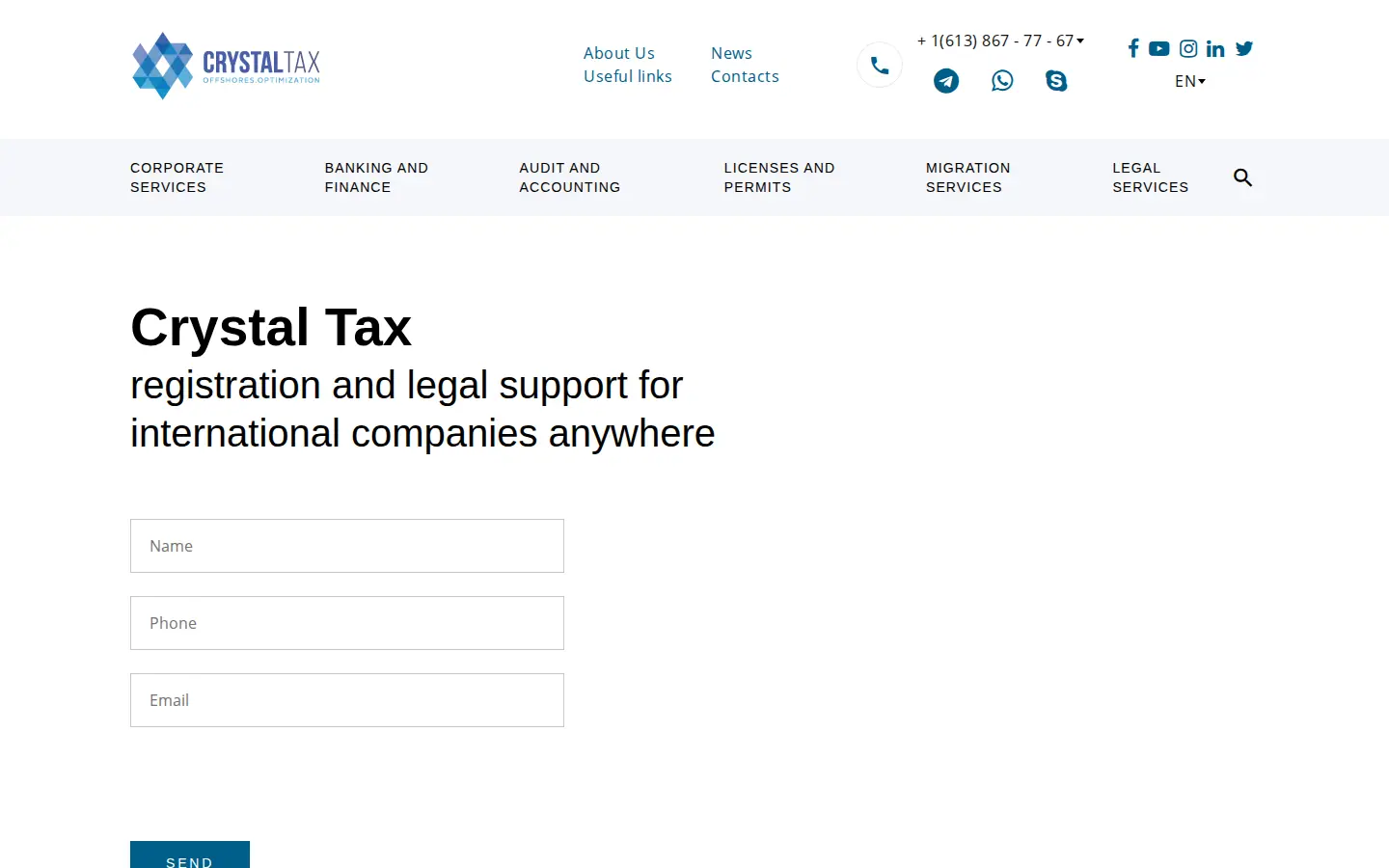
The form now requires a name and one contact, phone or e-mail. A bot guard checks fill time and a hidden field and accepts real people even when the Cloudflare challenge fails to load. Every form row is written to the database first, and a cron job retries the e-mail until it is delivered. A consultation button went into the header and the mobile bar on every page, and booking through Cal.com went live in six languages. A watchdog reads new rows every two minutes, posts each one to the team and sends a reminder two hours later if nobody has replied.
2. Make the measurement honest (22 September)
Consent Mode now grants measurement outside the European Economic Area, the UK and Switzerland and keeps it denied inside them. generate_lead became a key event in GA4, and clicks on phone, WhatsApp and Telegram links are counted on the server. After the change GA4 organic sessions jumped four- to fivefold. Almost all of that jump was the repair of measurement, so growth from here on is read in Search Console and the server logs.
3. Technical hygiene on the URLs Google actually sees (1–17 September)
The list came from Search Console, since the site's own sitemap was part of the problem. A redirect loop that made 45% of requests 301s was removed, an .htaccess rule that caught "assets" inside any slug was fixed, old aliases were mapped to their translations with 301s, real 404 pages were added for the Ukrainian and German versions, and real publication and edit dates replaced a fake "freshness" stamp.
4. Striking distance without moving URLs (23–24 September, 30 September)
On 23 September 31 pages that already ranked at positions 4 to 20 for queries with impressions were rewritten: a title of 60 characters or fewer carrying the query, a new description, an answer to the question in the first paragraph, "what we do and what we need from you", an FAQ and internal links. No URL changed. Where a page already earned clicks at position 8 or better, only the tail of the title moved. A second wave on 30 September rewrote 46 more pages in four batches, with every legal reference checked against its source; the verification pass corrected a tax-code reference on 9 pages.
5. Positioning as paid expertise (24 September)
The firm sells experience, time and responsibility, so do-it-yourself routes came off the service pages. Six priority services (DUNS numbers, NCAGE codes, US companies, US accounting, German VAT and UAE accounting) were published in all six languages, 36 pages in total.


6. AI search and indexing
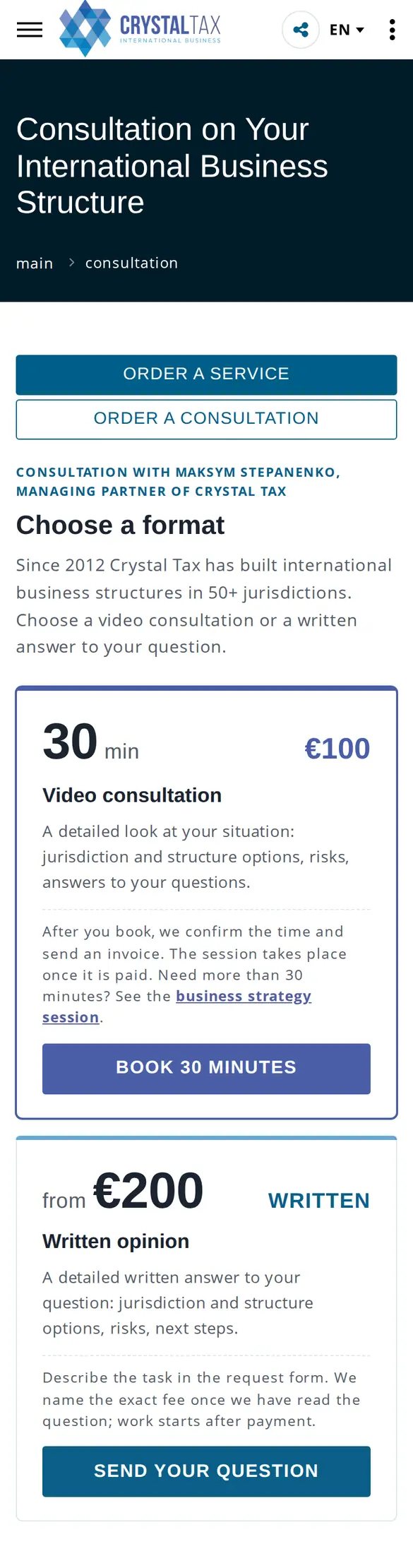
llms.txt and direct answers in first paragraphs went in alongside IndexNow pings and sitemaps with honest last-modified dates. The server logs showed ChatGPT's user agent fetching the site about 31,000 times between 30 July and 25 September, and referral visits from ChatGPT and Perplexity running at one to three a day from mid-September.
What happened
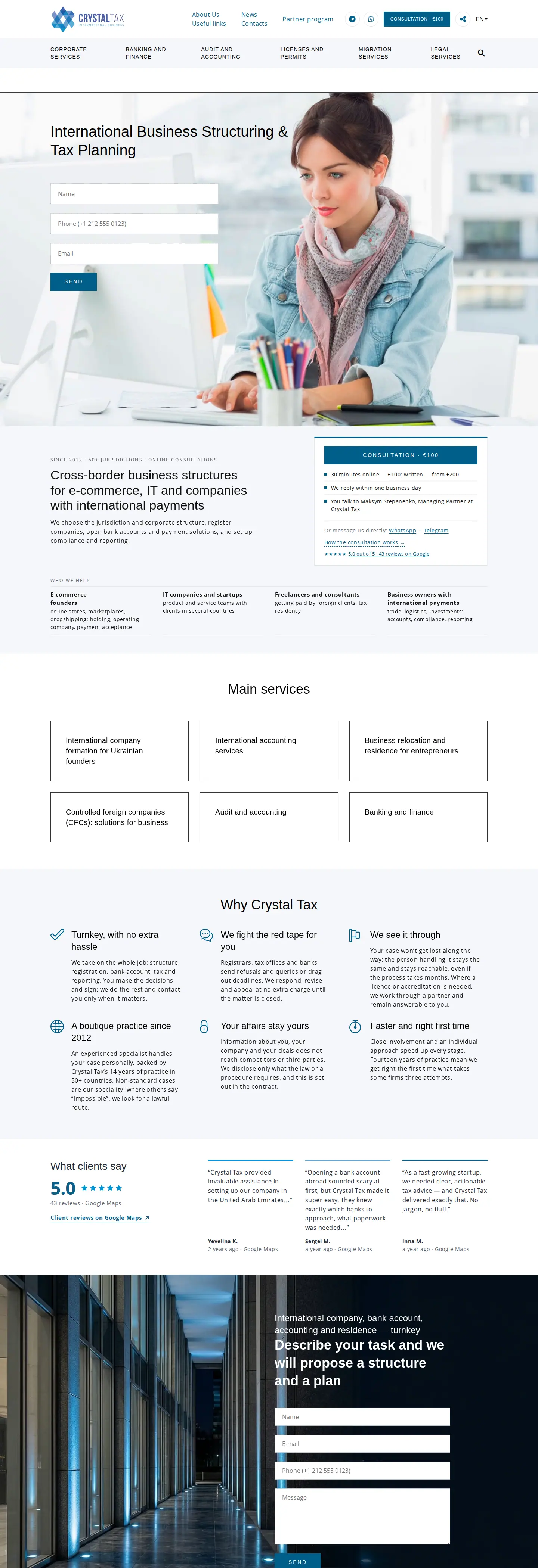
Enquiries. On 24 September two live enquiries arrived within three hours. The first came from ChatGPT (utm_source=chatgpt.com) to the consultation page and asked for long-term support of a cross-border structure. The second came from Google to the Ukrainian page on UAE accounting, rewritten that same day. Between 24 September and 29 October 35 enquiries passed the spam and test filters and reached the team, against one in the first three weeks of September. By language: 12 Russian, 6 Ukrainian, 4 English, 4 French, 3 Spanish and 1 German, with 5 more after 24 October handled through a new first-reply flow. The weekly count in the chart settled at three to four after the first fortnight.
Rankings. In the week of 18–24 September 712 pages ranked in Google's top 10, against 572 in the week of 10–16 September. Impressions from positions below 20 fell from about 44,000 to 12,000 in the same comparison, which is noise: those positions bring almost no clicks.
Clicks. Search Console's domain property, set up on 28 September, counts 913 clicks for 30 September – 27 October. The 779 baseline was read from the URL-prefix property, close in scope since the site serves a single HTTPS host. That puts clicks above the 28 days before the diagnosis and far below the 2,676 of a year earlier, so most of the gain in enquiries comes from visitors who already arrived now reaching a form that works.
Single services. On the DUNS pages rewritten on 24 September, clicks went from 2 to 9 and impressions from 583 to 1,061 between the 28-day windows before and after, and average position from 10.5 to 8.2. The same tracking shows the NCAGE pages losing clicks (8 to 2), so the wave is a mix of wins and losses at page level.
What we would do next
Answer within the hour. The watchdog reminds after two hours. Several enquiries in October waited longer than that, and in this category the first firm to reply usually gets the call.
One address everywhere. The page markup still gives a Kyiv street address while the header and About page give Ottawa. Name, address and phone should match across the site, the markup and the business profiles.
English as the default. Russian is still the root language and the x-default hreflang target. English as x-default, with the oldest "buy offshore" pages rewritten or redirected, matches who is buying now.
A paid-search test on the six priority services, now that leads are counted and reach the team. Measurement is the condition that was missing in September.
Testimonial
Crystal Tax is a group brand, so this quote comes from inside our own group. It refers to the 2015–2016 build.
Throughout our work with Marketing MIX, the development team proved reliable, took responsibility for every task and handled complex work well and on schedule. The site turned out exactly as we planned: modern and functional, with many interesting solutions built in. We recommend the studio as a reliable, steady partner.
— Maxim Stepanenko, Director, CrystalTax
Related
The same recovery recipe applied to the group's law firm site: Legal Solutions, legal.ua. Law-firm websites: development of a website for a law firm. Search: SEO promotion. AI search: promotion in AI search. Other group legal brands: Key Solutions and Express Lawyer.
What search and AI assistants say about a firm and its founders: reputation management and personal reputation management for executives.
Project lead: Marketing MIX. Group brand: Crystal Tax. Years: 2015–2016 and 2026. The testimonial has been edited for readability from the original.