

The brief
ZARF is a game Marketing MIX made for itself, so this case is about our own product. It was built for Zoud GameLab 2026, a game jam on financial literacy with the theme "Make FinLit Fun", and the jam's rubric weighed gameplay, financial literacy, learning, creativity, commercial potential, regional relevance to the UAE and accessibility.
The player we wrote for is 18 to 30 and starting a first job in the UAE or the wider Gulf, often an expat who sends money home. For that person the hard part of a budget is the month itself: rent, bills, a family that counts on a transfer, a brunch invitation, a cracked phone and a credit card that is always one tap away. The brief was a game where the lesson comes from the player's own year and is never lectured in advance.
What we built
Twelve paydays
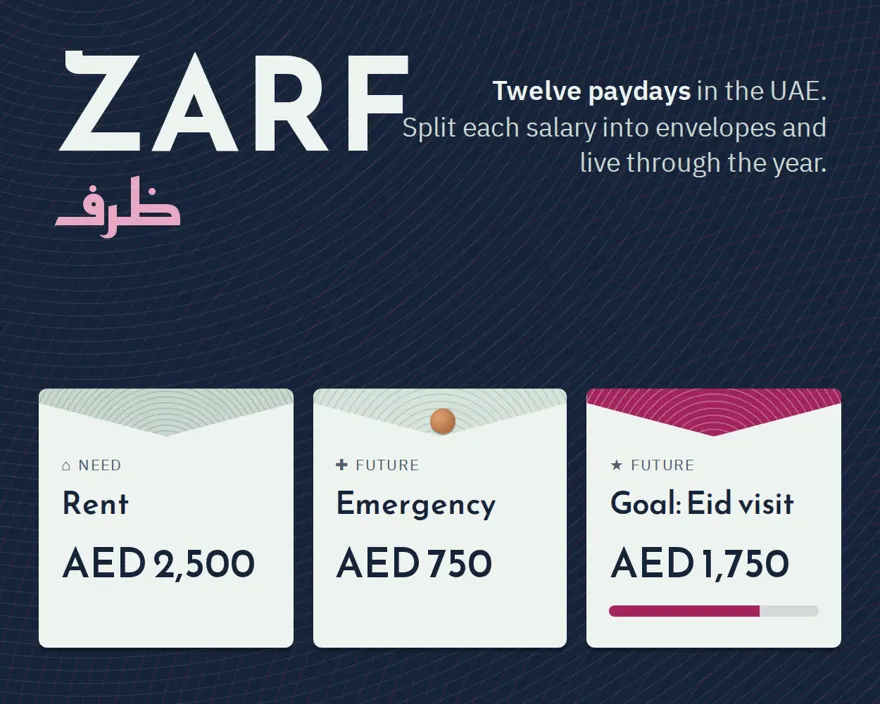
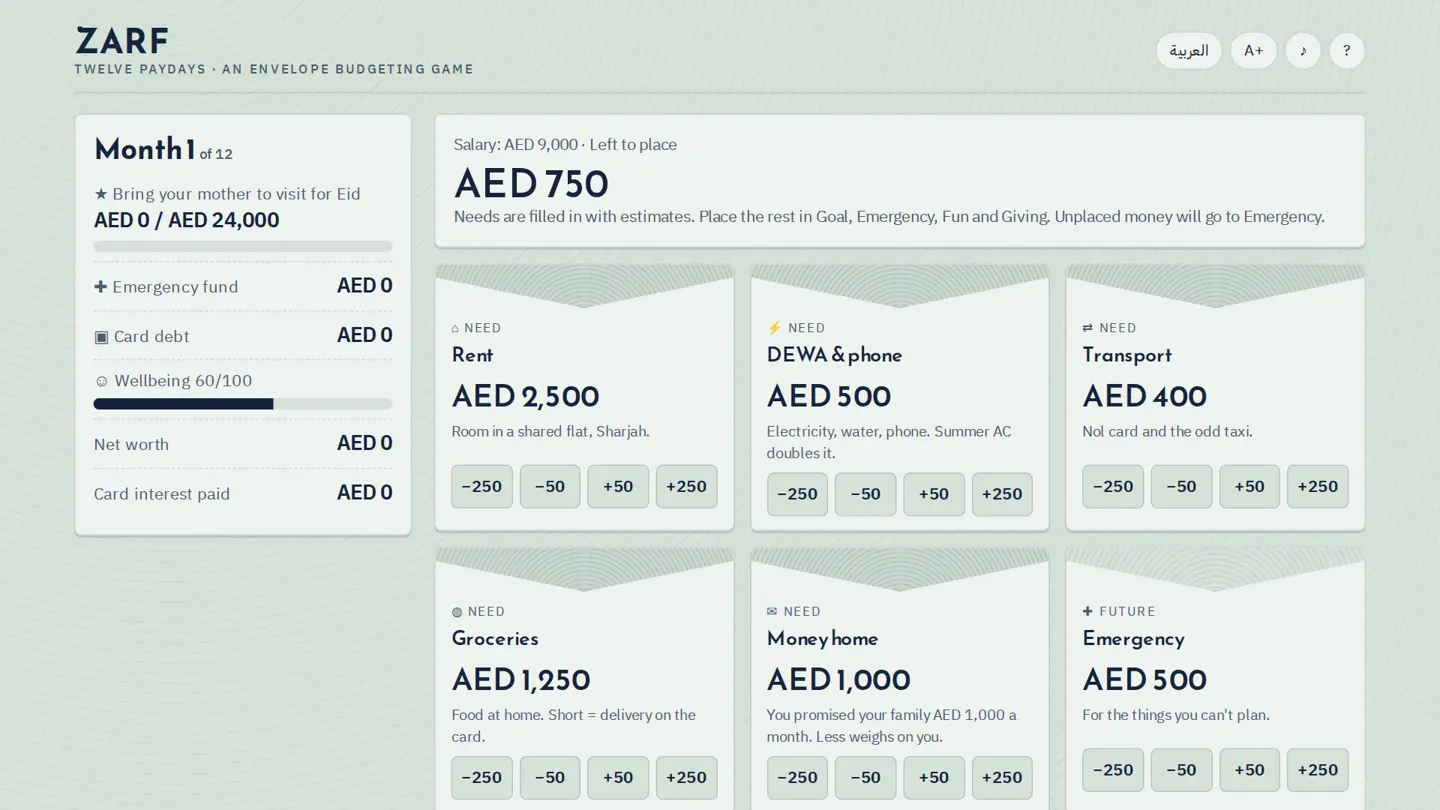
One month takes about a minute. On payday the salary arrives and every dirham gets a job in one of ten envelopes: Rent, DEWA and phone, Transport, Groceries, Money home, Emergency, Goal, Fun, Giving, and Pay the card once there is debt. Money left unplaced falls into Emergency. From the second month each need envelope shows what it really cost last month and warns when the plan is lower.
Then life happens. Three seeded events a month come from 14 types: costs like a dentist visit or a visa medical, temptations like a Friday brunch, a flash sale or a "0%" phone plan, social duties like a cousin's wedding or a friend asking for a loan, and windfalls like a bonus. Each cost is paid from its envelope, and when the envelope is empty the rest goes on the card. The card grows about 3% a month on what is still owed, and the goal fund earns a small profit.
At month end, Fun money is spent and keeps wellbeing up, Giving is given out, and the player decides where leftovers go and whether to clear the card from savings. Cutting fun to zero saves money and drains wellbeing, and a tired player starts buying on impulse. After twelve months the end screen shows card debt, wellbeing, a score, a chart of the year and lessons written from what this player actually did.
Built around the region
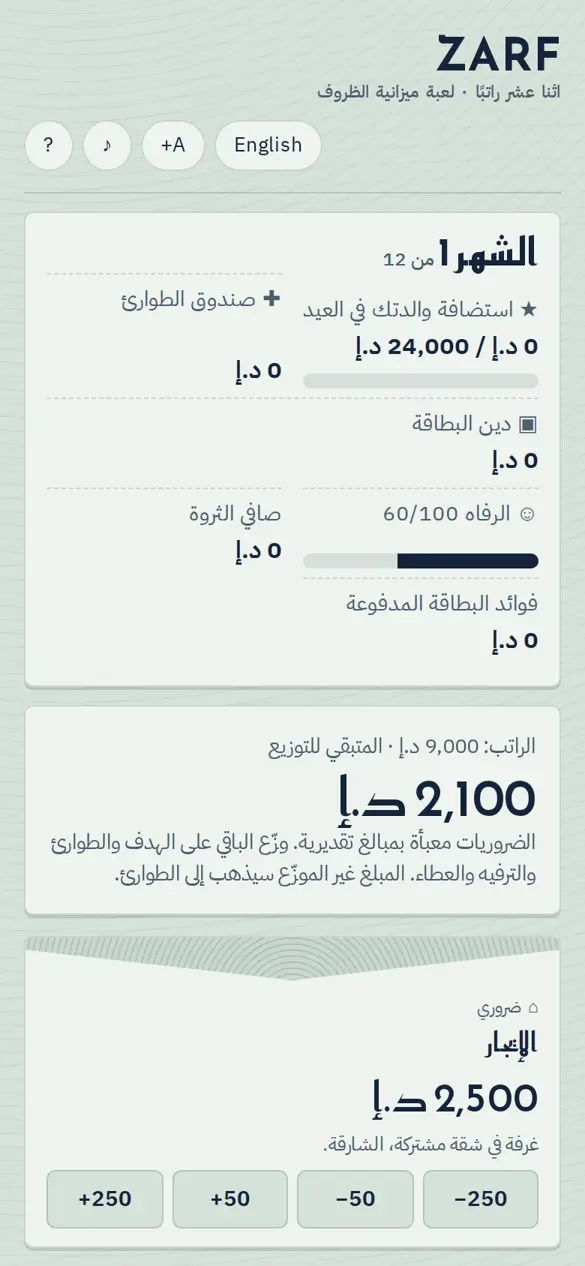
The game uses the dirham and its Arabic sign, a shared flat in Sharjah, DEWA bills that rise with summer air conditioning, the Nol card, a visa medical and Emirates ID renewal, a rent rise in month seven, family remittances, sadaqah and Friday brunch. The full interface runs in English and in Arabic with a right-to-left layout.
Accessible from the first build
The game plays with a keyboard alone, with visible focus kept inside dialogs. Every control has a screen-reader label, the money left to place is announced as it changes, and colour is never the only signal. A large-text mode, no timers, reduced motion and sound off by default complete it. The axe-core checker reported zero violations on every screen type at phone and desktop sizes in both languages.
Tools behind the jam build
The game is a single HTML file of about 55 KB with no backend. A balance simulator plays hundreds of seeded years with scripted strategies, and a QA script plays a full year by clicks with accessibility checks. The daily mode gives everyone the same surprises on the same day, and a link with a year number gives a class one shared year. For the jam we also wrote a concept document and a budget, both published next to the game, and recorded a two-minute gameplay video with English subtitles.
Where it stands today
On 8 November 2026 ZARF is live at zarf-game.pages.dev in English and Arabic. The first screen asks the player to pick a dream for the year, offers the shared daily year, and has buttons for Arabic, larger text, sound and help. The concept document opens at /gdd and the budget at /budget. The entry was submitted to the Zoud GameLab jam on itch.io on 4 November 2026.
Related
Learning products: educational websites. The sector: education. Our other browser games: TOPPLE and Raccoon Pentathlon.
Project lead: Marketing MIX. Product: ZARF, a financial literacy game of our studio. Year: 2026.