
The brief
RootsLab is a product of Marketing MIX, so this case is about our own work. It answers a request many families with roots in Ukraine and the former USSR share: find out who our ancestors were. The records exist. Parish registers, revision lists, censuses and Soviet civil records have survived in many archives, and a growing part of them is digitised. They are handwritten, scattered across collections and written in old orthography, and a family tree built from internet guesses mixes real relatives with namesakes.
The brief was a research service with a strict rule of evidence and a working tool behind it. Every link in the tree must point to a record a client can open, and what is proven must stay apart from what is assumed.
What we built
The research desk
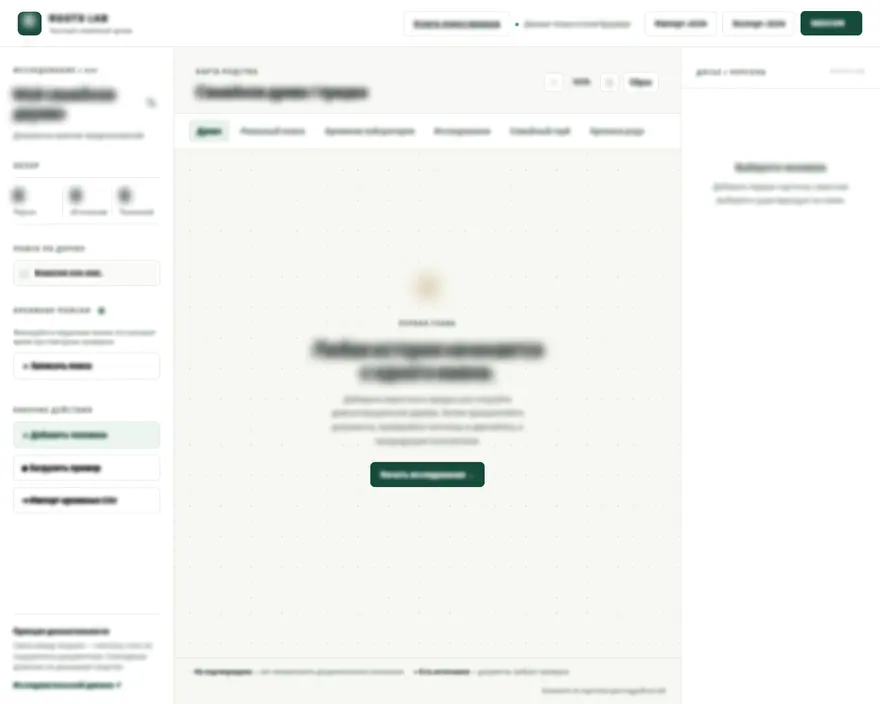
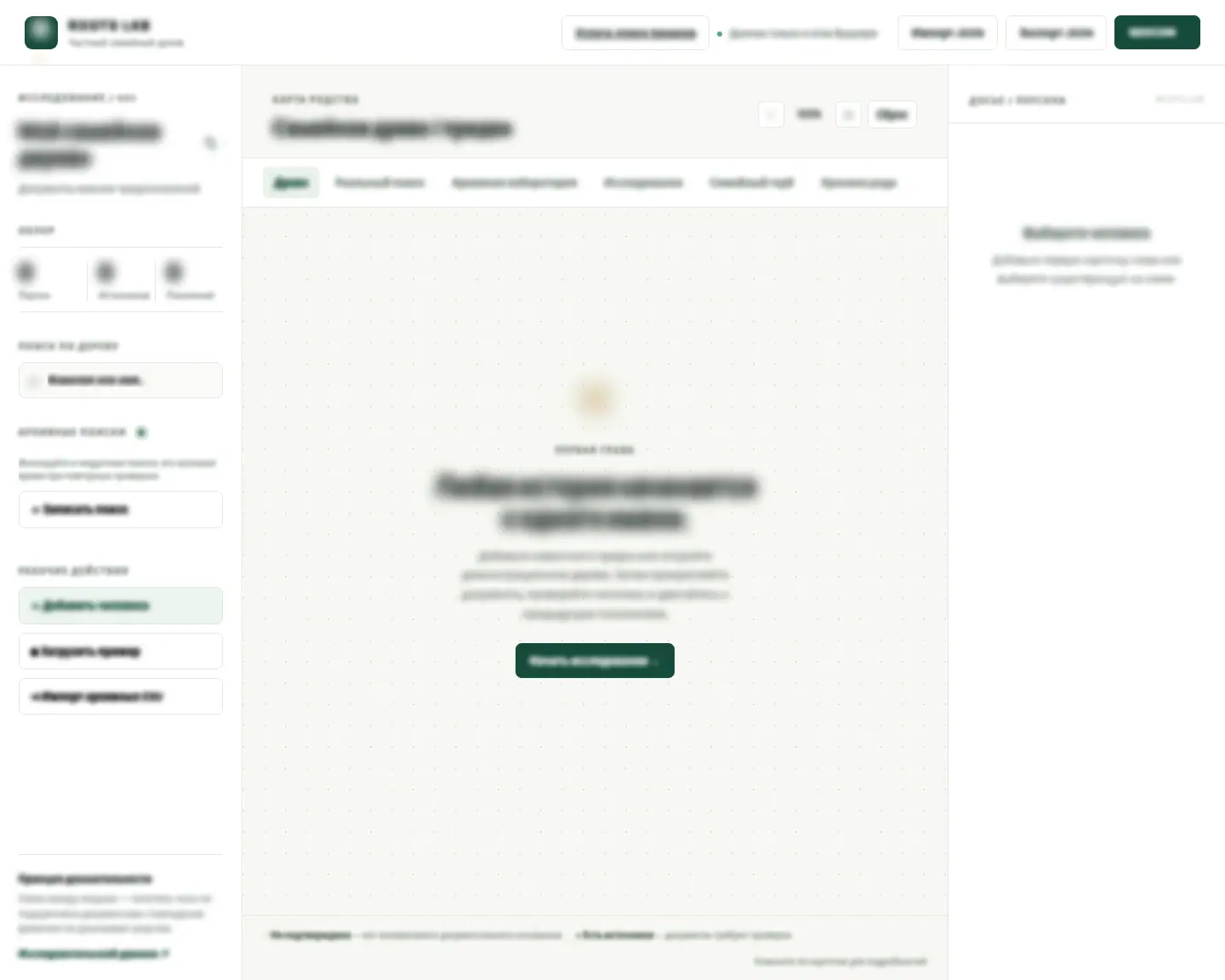
The desk is a browser application, started on 3 November 2026. It holds the family tree, people, sources and the log of archive searches, with counters for persons, sources and generations. Its sections are the tree, a live catalogue search, an archive lab, research tasks, a family coat of arms and a family chronicle. The principle is printed on the screen: a link between people is a hypothesis until documents support it, and a matching surname proves nothing.
Each relationship carries a status and the sources for and against it. A sample family can be loaded to show the desk at work. The tree imports archive CSV files and exports to JSON and GEDCOM, so it opens in any genealogy program.
The archive lab and catalogue search
The archive lab stores a scan of each page with its SHA-256 fingerprint, the exact archive reference and sheet, and the transcription. Unchecked machine reading never turns into a biographical fact. Scans stay in the browser's own storage and never reach our server. A ZIP archive with the tree, metadata and images can be downloaded and restored, up to 120 MB and 150 scans.
The catalogue search sends the typed words straight to Internet Archive and Wikidata and saves leads in the browser. The page explains that a match there is a direction to check, never proof of kinship.
A pilot for handwriting recognition
Handwritten records are slow to read, so we tested whether a machine can help. An open handwriting model for Ukrainian was run on nine human-checked lines from three archive pages of a public dataset. It got 21% of characters wrong. That is enough to help search a page and too much to trust a transcription, so the service promises a human reading of every record and uses the machine as a search aid.
The service page
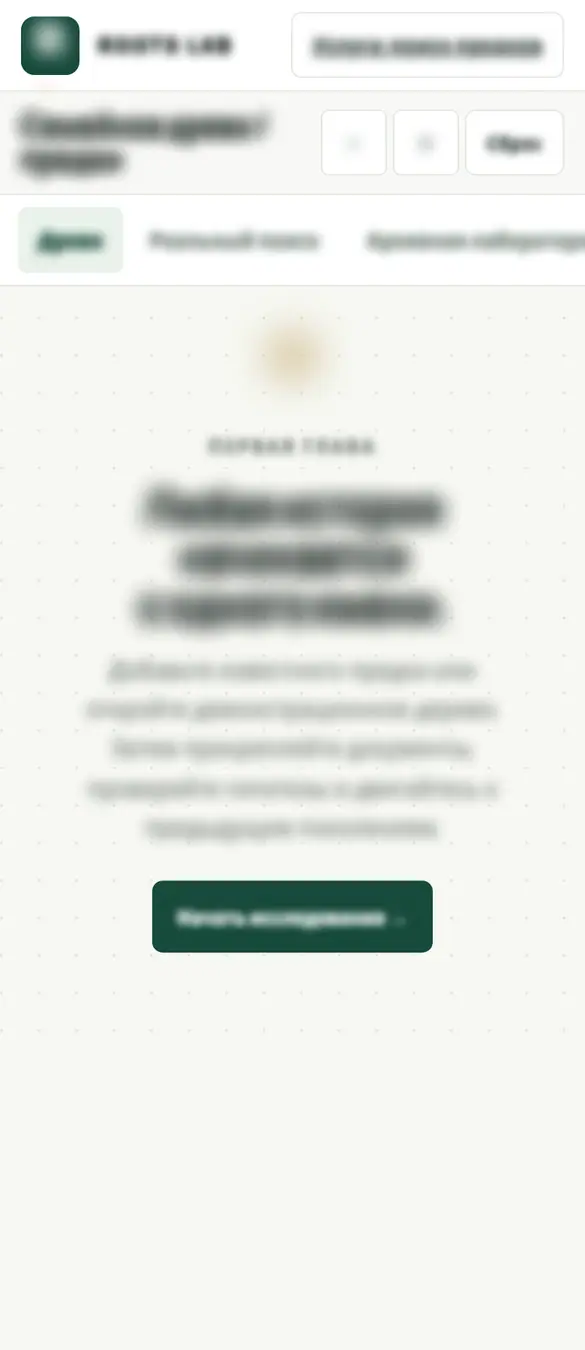
On 6 November 2026 the service page went live in Russian. It opens with the line "Your ancestors are already on record. We will find where." Below it, a fragment of an 1898 parish register is laid out as a table, old spelling next to modern, with invented names, to show what a record looks like. Four blocks explain the sources, the tree, the report and the handwriting rule. Four steps follow: what the family knows, a search plan the client sees before work starts, work with the records, and the tree with the report. A two-source rule, a link to the open demo of the desk and a request form close the page. The desk also got a phone layout with bottom tabs that day.
Where it stands today
On 8 November 2026 the research desk opens at rootslab.mmix.biz and the service page at rootslab.mmix.biz/service.html, both in Russian. The desk header shows "Data only in this browser", JSON import and export, GEDCOM and a link to the service. The service page ends with the request form: name, what is known, and a phone, e-mail or messenger.
Related
Web builds: corporate websites. Search: SEO. Another research product of ours: Evidence Ledger.
Project lead: Marketing MIX. Product: RootsLab, an ancestry research service of our studio. Year: 2026.