

The brief
CRMiUS is the CRM product of the business group Marketing MIX belongs to, so this case describes work on our own product. It was assembled in November 2024 for small and mid-sized companies that run sales, money, projects and stock in four different tools and copy data between them by hand. Under one login it covers leads and customers, proposals, estimates and invoices, projects with Gantt charts and timesheets, tasks, support tickets with a knowledge base, warehouse and purchasing, accounting reports and HR, with a customer portal where clients see their invoices and projects and pay online.
By October 2026 the product had outgrown its website. crmius.com ran on a MODX template with stock pictures and generic praise, and Search Console showed the cost: over the 90 days to 28 October 2026, a window that is mostly the old site, its queries collected 16,571 impressions and no clicks (Google Search Console data via muginai, exported 31 Oct 2026). Searchers saw the pages and found nothing on them worth a click. The brief for the rebuild: say what the product does in the buyer's own terms, show the real interface, let people try it without a sales call, and keep every address the site had already earned.
What we built
A static site in five languages, built from facts
On 16 October 2026 crmius.com moved off MODX to a static Astro build. The site has 200 pages: 43 in English, 40 in Ukrainian, 40 in Russian, 39 in French and 38 in German, each language with its own sitemap and hreflang links between the versions. Every page was rewritten, and the rule for the copy was strict: a sentence may describe only a module, a screen or a commercial term that exists in the product today. Customer counts, ratings, certifications and invented testimonials are banned from the site, and the old fake reviews went with the template.
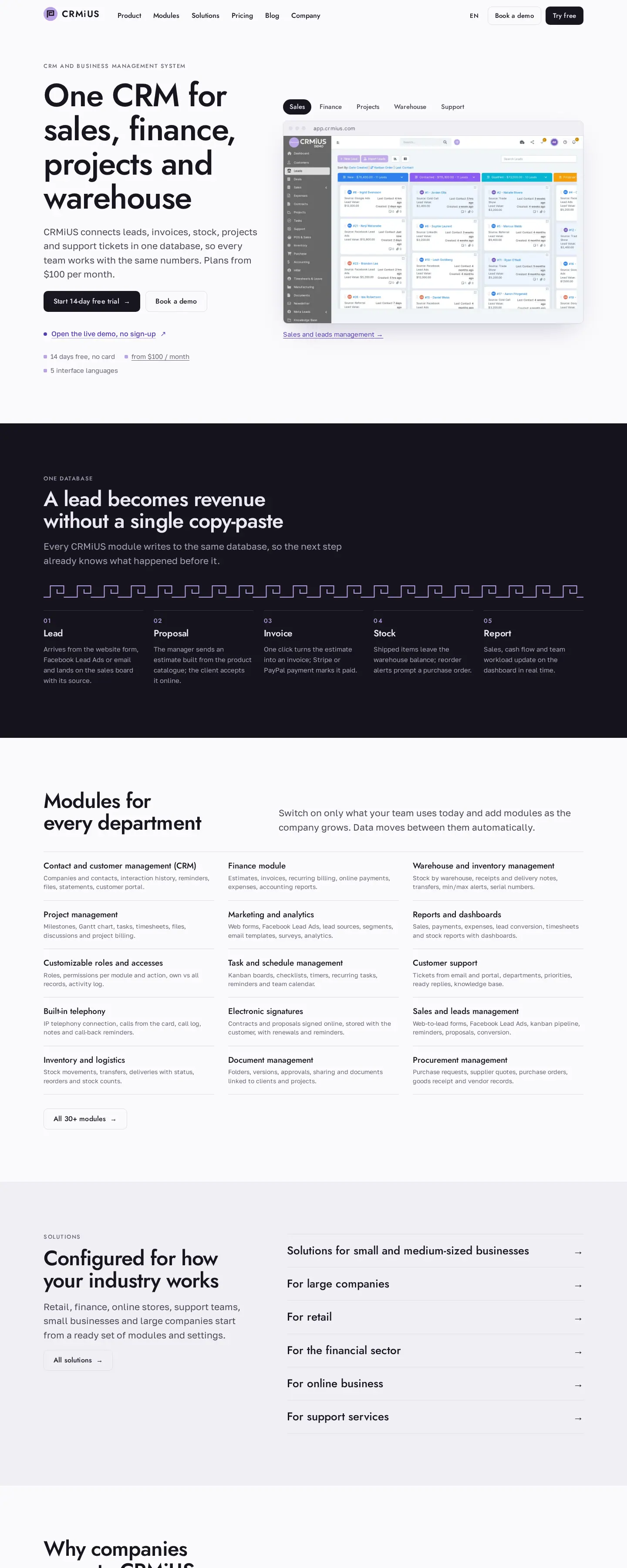
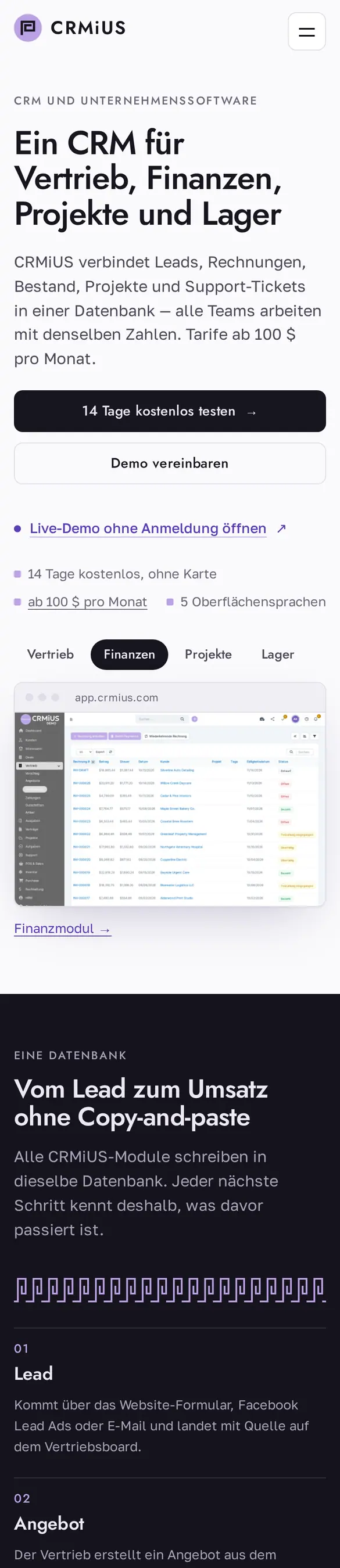
The home page answers the first question a buyer has: what will this replace. One headline names the four jobs (sales, finance, projects, warehouse), and a dark band below it follows a single deal through the system, from a lead arriving from a web form or Facebook Lead Ads to a proposal, an invoice, stock leaving the warehouse and the report that shows it. Modules come next as a plain list grouped by department, and industry pages for retail, finance, online business and support teams follow.
Screens from a working CRM
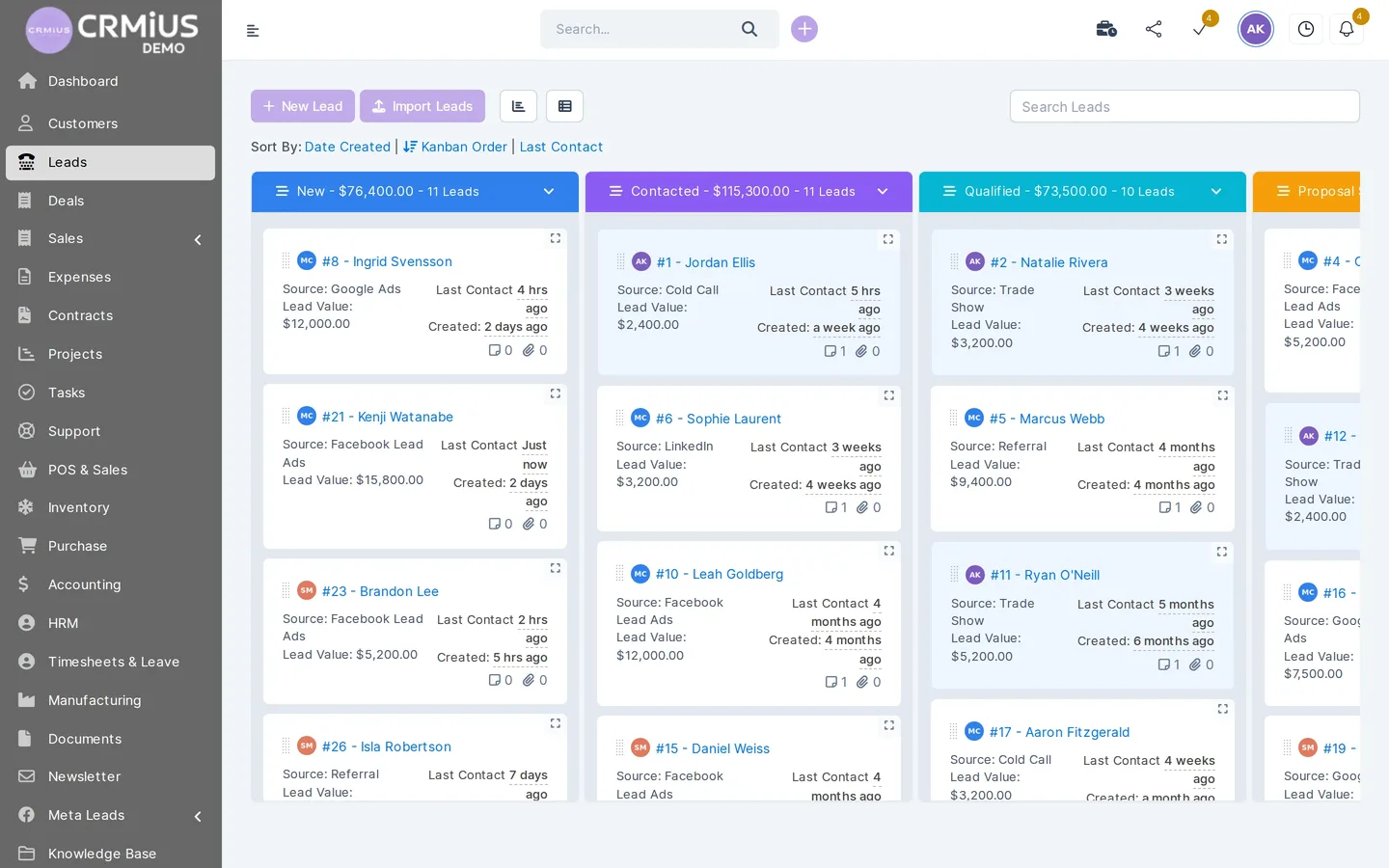
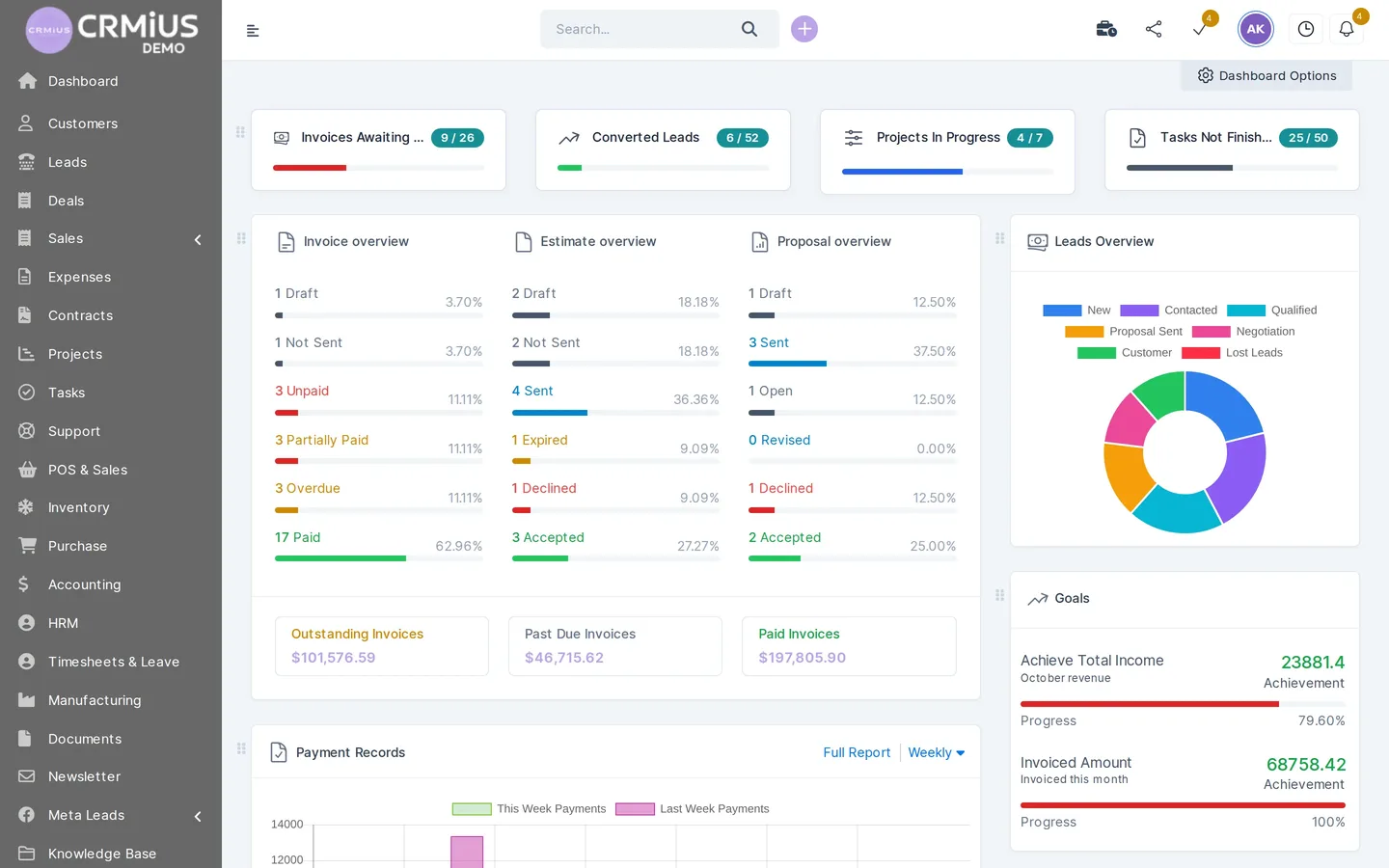
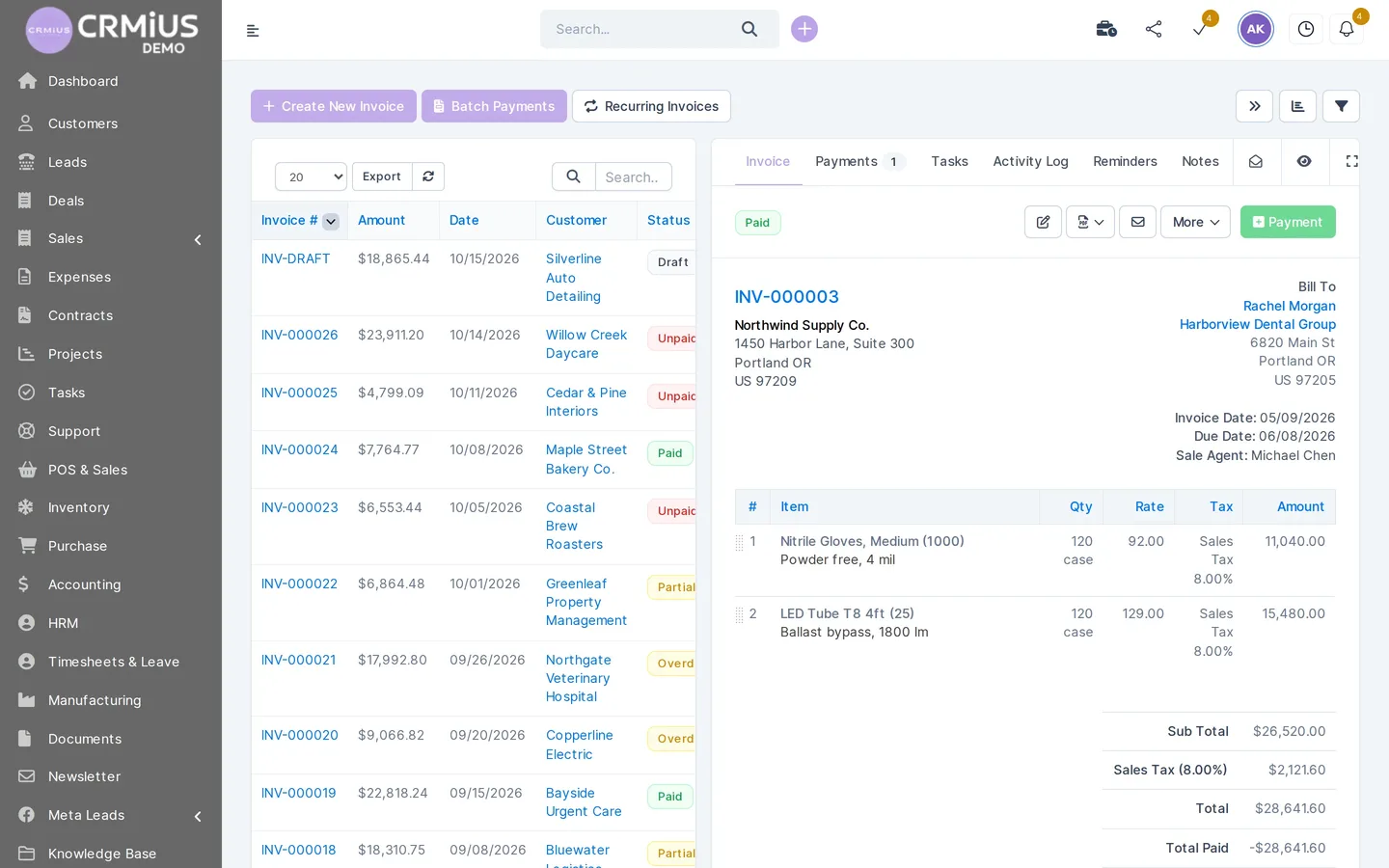
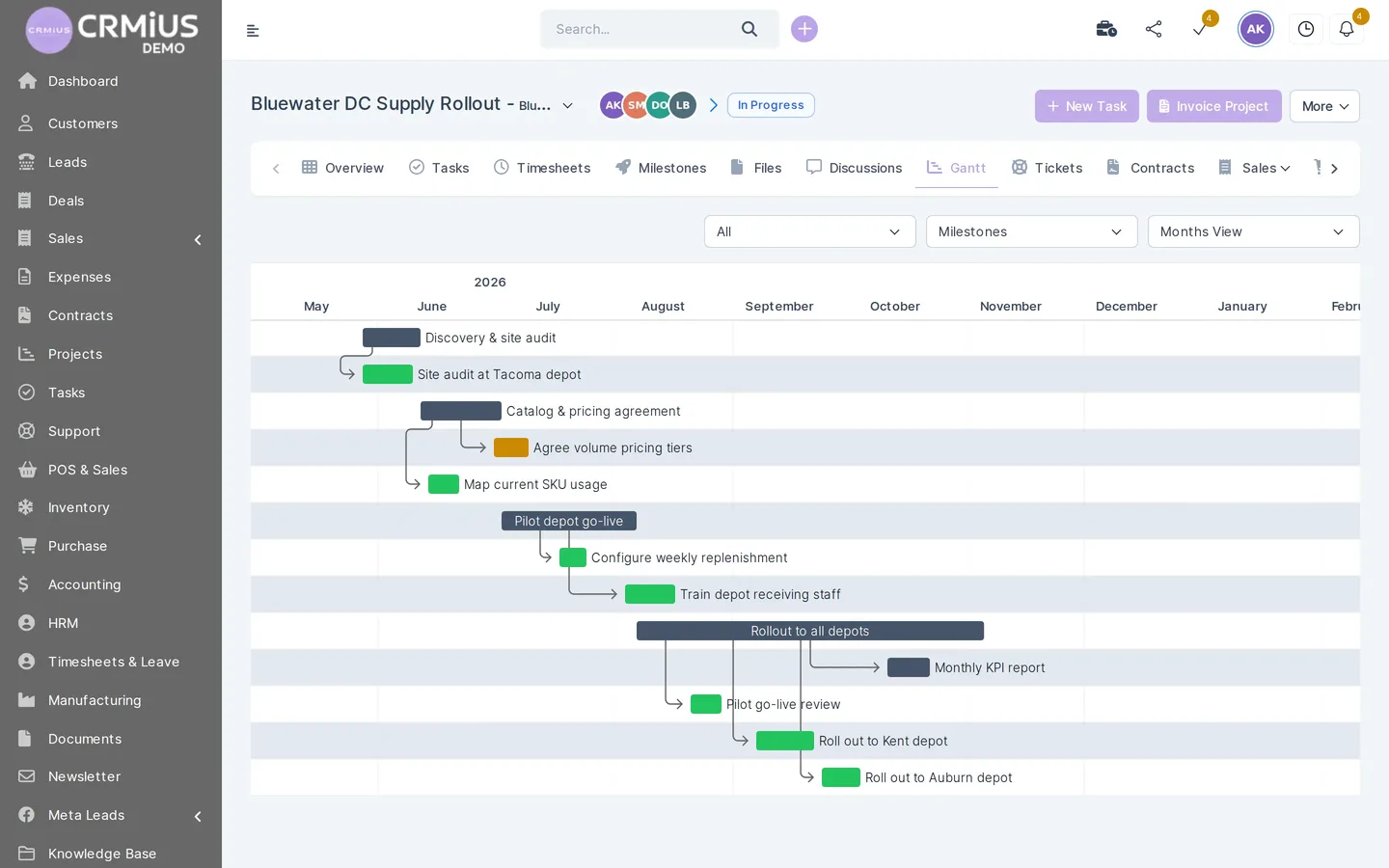
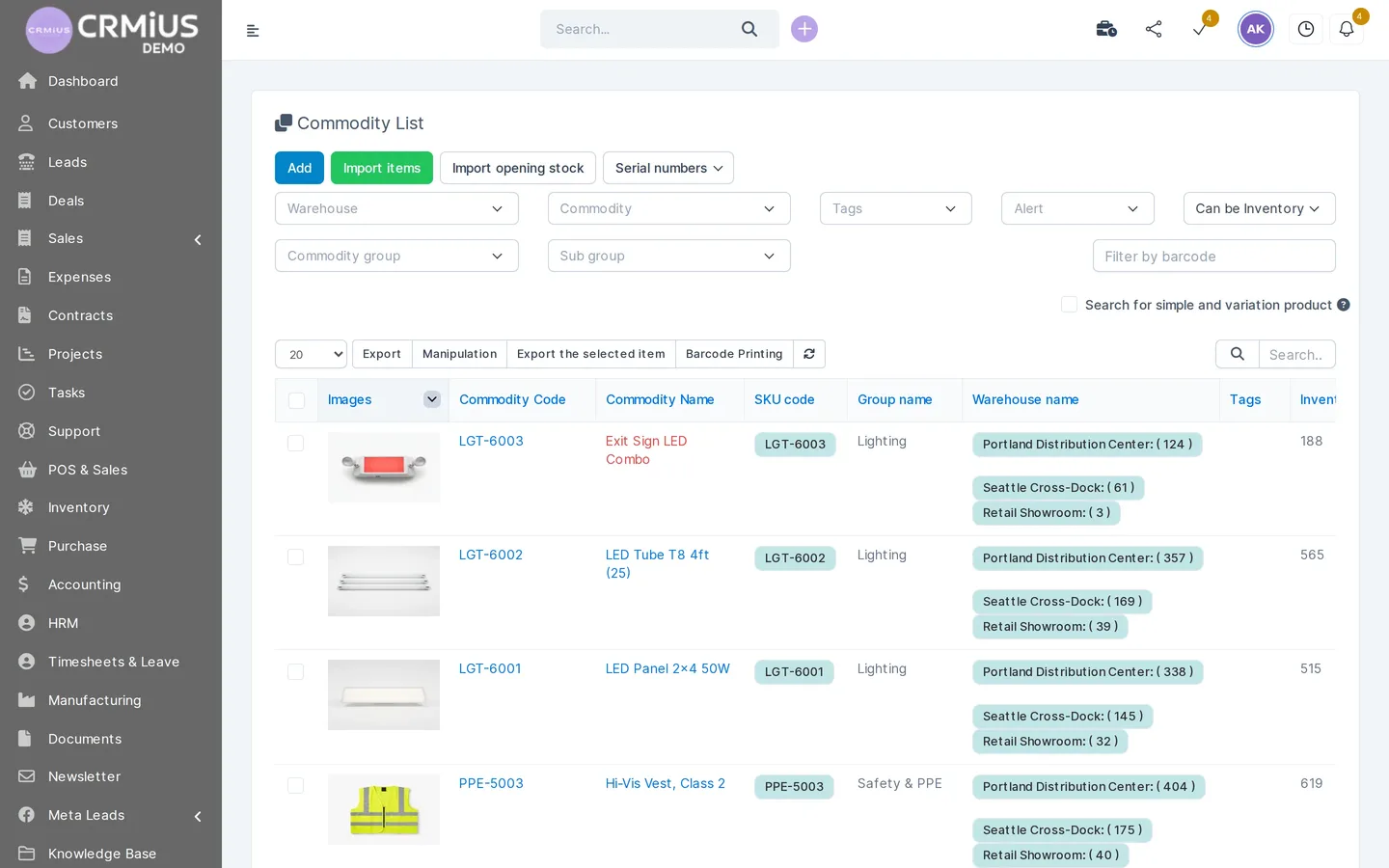
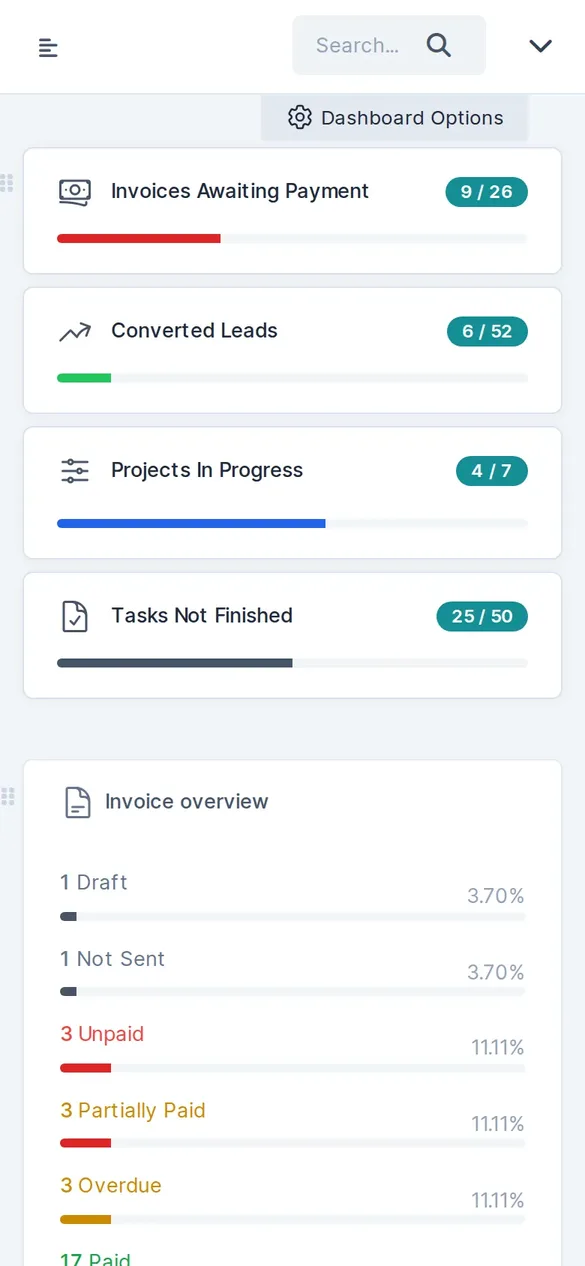
Every screenshot on the site comes from a running copy of CRMiUS filled with a fictional company, Northwind Supply Co., with invented customers, leads and invoices. Buyers of business software look at the interface before they read a word, and a real screen with a full lead board answers questions no copy can: how dense the screens are, what a card shows, where the menu sits. The same screens were captured in each of the five languages.
A live demo with no sign-up
On 20 October 2026 a public demo opened at try.crmius.com. A visitor clicks "Open the live demo" on any page of the site and lands inside the CRM as the administrator of the fictional company, in the language he was reading. Settings, staff accounts and modules are locked, the demo runs on an isolated network with no access to the outside, and the data resets on a schedule with the dates shifted forward, so the board always looks like a live business this week. The demo link sits in every hero and in the closing call to action, and each click is counted in analytics.
Nothing lost in the move
A site move is where search history usually gets lost. Before the switch we exported every address the old site had in its sitemap and in Search Console and built the new site to answer at the same addresses, with 301 redirects for the duplicates MODX produced (pages reachable with and without a trailing slash or as index.html). On 31 October 2026 all 200 addresses on that list answer 200. Images keep their old paths too.
Requests that land in the CRM itself
The request form on crmius.com writes the request straight into CRMiUS as a lead, with the chosen plan and the page it came from, and only then sends the notification e-mail. Spam is filtered before the CRM sees it: a bot check, a hidden trap field and a limit on requests per visitor. A test request with a reserved test address goes into the log only, so checking the form never creates a fake lead for the sales team.

What happened
The move went live on 16 October 2026 and the demo on 20 October, so on 31 October the new site has two weeks of history, too short for a search result worth reporting. What can be checked today: 200 pages in five languages are in the sitemaps, all 200 old addresses answer, and the demo opens in every language. Clicks from search and demo openings are measured from the first day of the new site.
What we would do next
Comparison pages. Buyers of a CRM search for "CRM for retail", "CRM for a warehouse" and "alternative to" the tools they already use. The industry pages cover the first kind; pages that compare CRMiUS module by module with the usual alternatives would meet the second.
The demo as the main call to action. Once there is a month of data, compare requests from visitors who opened the demo with those who did not, and move the demo above the trial button if it converts better.
AI answers. The site already carries llms.txt and a facts file in plain language. The next step is the questions buyers ask assistants ("which CRM has a warehouse and accounting in one system"), each answered on a page with the screen that proves it.
Related
The site: corporate websites. Search and the move: SEO. Visibility in AI answers: LLM SEO and GEO. The sector: B2B SaaS. Another product of our group: Unistaff.ai.
Project lead: Marketing MIX. Product: CRMiUS, the CRM of our business group. Years: 2024–2026.